Field Guide · Peconic & Beyond

Shellfish
& Forage.

The bivalves, crustaceans, and shellfish that define East End food culture — from Peconic bay scallops to Bluepoint oysters to the lobster fishery that once was. Some are bait, some are dinner, most are both. Know what's in season and where to find it.

01 · The Peconic Icon

Bay Scallop

Argopecten irradians · Peconic bay scallop

The single most iconic East End shellfish. Peconic bay scallops are tiny, sweet, and inseparable from the cultural identity of the East End — opening day of scallop season (first Monday in November) is a local holiday, the meat shows up on every restaurant menu in Sag Harbor, East Hampton, and Greenport, and the fishery has shaped Peconic Bay for over a hundred years.

A small bivalve, two to three inches across, with the distinctive ribbed scallop shell. Lives in the eelgrass beds of Peconic Bay, Gardiners Bay, and Shelter Island. The 1985 brown tide nearly wiped them out; the population has rebuilt slowly since, and is fragile. Every scallop matters.

Tested-and-killed in the kitchen — bay scallops are eaten raw, briefly seared, baked with breadcrumbs, or simply tossed with butter and pasta. They are not the giant sea scallops you see in restaurants nationally — those are Placopecten magellanicus, the offshore species. Peconic bays are smaller, sweeter, and entirely a Northeast specialty.
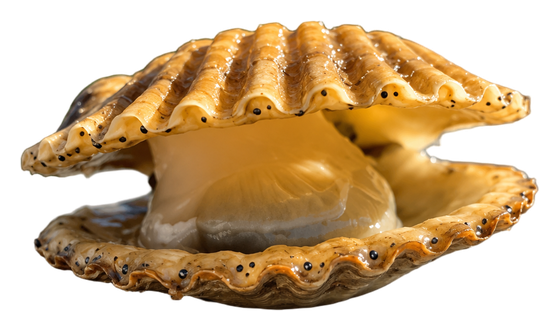
Scallop
Size2 – 3"
Season1st Mon Nov – Mar 31
WherePeconic · Gardiners Bay
PermitTown required
LimitVaries by town
How to Harvest

Recreational harvest is by hand-rake or scallop net from a small boat. Requires a permit from East Hampton, Southampton, or Shelter Island town clerks (varies by where you harvest). Daily limit typically one bushel per permit holder. Always check current town regs — they change year to year based on stock surveys.
02 · The Native

Oyster

Crassostrea virginica · Eastern oyster

Long Island's other iconic bivalve. The Eastern oyster built the towns of the South Shore — Bluepoint, Oyster Bay, and Blue Point itself all get their names from the historic oyster industry. The Great South Bay oyster collapsed in the early 20th century from over-harvest and pollution; the Peconic and Gardiners Bay populations remained quieter but persistent.

Today the East End oyster fishery is a mix of wild harvest in approved waters and a growing aquaculture industry. Peconic Pearl, Widow's Hole, and several smaller East End farms now produce some of the best oysters on the East Coast. Salty, briny, with the cold-water minerality the East End is famous for.

Wild oysters can be harvested with a town shellfish permit in approved waters. Most of the Bay is closed to wild harvest due to water quality classifications — always check current shellfishing closure maps from NY DEC and the towns before harvesting.

Size2.5"+ legal
SeasonYear-round (approved waters)
WherePeconic · Gardiners · approved zones
PermitTown required
LimitVaries by town
How to Harvest

Tongs or hand-pick at low tide in approved waters only. Wild harvest requires a town shellfish permit. Most of Peconic Bay is restricted — only certified-clean zones are open. Check DEC shellfishing closure maps before harvesting. The easier path: support local oyster farms — they grow some of the best oysters in the country.

03 · The Everyday

Hard Clam

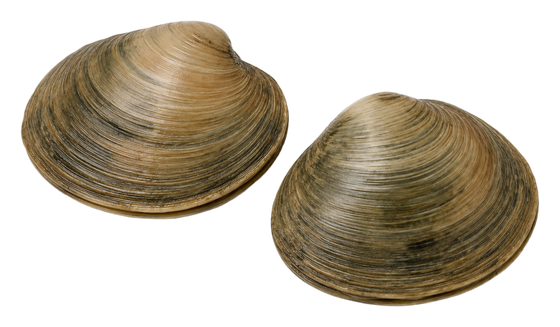
Mercenaria mercenaria · quahog / cherrystone / littleneck

The eating clam (as distinct from the surf clam used as bait — see the baitfish guide for that one). Hard clams are the foundation of East End shellfish dining. Same species, different sizes are different products: littlenecks (smallest, raw on the half shell), cherrystones (medium, baked or in chowder), chowders (largest, soup and chopped clam dishes).

Live in sandy and muddy bottoms in Peconic Bay, Gardiners Bay, and the back creeks. Harvestable year-round in approved waters. The most accessible East End shellfish — you can rake a dozen littlenecks in a calm hour on a sandy bottom flat.

Town shellfish permits required. Daily limits are generous (typically 100 hard clams per permit holder per day). The clamming culture in places like Three Mile Harbor and Northwest Creek goes back generations.

Quahog
SizesLittleneck → Chowder
SeasonYear-round (approved)
WherePeconic Bay · Back creeks
PermitTown required
Limit~100 / day / permit
How to Harvest

Hand-rake in sandy or muddy bottoms at low tide in 1-4 feet of water. Look for the small siphon holes in the sand. Recreational permit from the town where you're harvesting. Most accessible East End shellfish — beginners can succeed on day one.

04 · Bivalve

Blue Mussel

Mytilus edulis

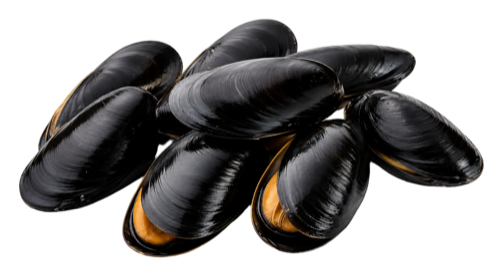
Blue mussels grow in dense beds on every East End jetty, bulkhead, and exposed rock. Free for the taking, and one of the most natural baits you can use for fish that feed on the rocks.

The soft cream-colored meat inside is what togs and porgies eat in nature — the same fish chew through mussel beds every day. Hook the meat directly or salt it overnight to toughen it up.

Especially deadly when the salty mussel scent gets into a churning rip — togs key on it. Sea bass will pick at smaller pieces on a high-low rig.

Mussel
Size1 – 3"
SeasonYear-round (low tide)
WhereJetties · Bulkheads · Rocks
UseShucked meat on hook
How to Use

Pry mussels off the rock at low tide. Shuck and hook the meat through the foot on a #1 to 2/0 hook. Salt the meat overnight if you want it to stay on the hook longer.

04 · The Vanishing Fishery

Lobster

Homarus americanus · American lobster

The lobster that built Montauk's commercial fleet. Once one of the most important East End fisheries, the southern New England lobster population has been in steep decline since the late 1990s due to warming waters, increased disease, and shifting predator dynamics. The Long Island Sound lobster fishery essentially collapsed; remaining lobster work happens further east, around Block Island and out toward the canyons.

For recreational anglers, the lobster fishery is heavily regulated and increasingly difficult. A NY DEC lobster permit is required for recreational lobstering, with strict gear restrictions, size minimums, V-notch egg-bearing female releases, and gauge requirements. Most East End lobster eaten today comes from Maine.

Worth knowing about as part of East End fishing culture, even if the active fishery isn't what it was. The aquaculture and habitat-restoration story continues to evolve.

Min Carapace3 3/8" (NY)
SeasonVerify with DEC
WhereLimited near-shore · Offshore
PermitNY DEC lobster req.
Limit6 / day (recreational)
How to Source

Active recreational lobstering on the East End is difficult — population is sparse, gear regulations are strict, and most local lobster is imported from Maine. Verify all regs with NY DEC at dec.ny.gov before setting any traps. For eating, the easiest path is to buy from a local fish market.

Also See: Bait + Shellfish Crossover

Several items appear in both this guide and the Baitfish Guide — used both as food and as fishing bait. The distinction is the role, not the species.

Get the Report.

Friday morning intel — what's running, where, and what's hitting it. Right to your inbox.

Subscribe